Guild Wars Reforged
About the game
Guild Wars Reforged is a modernized re-release of the original Guild Wars from 2005 — and it's worth saying up front: this is not Guild Wars 2. It's ArenaNet's co-op online RPG that once carved out its own idea of what an MMO could be, now bundled into a single package and fitted to today's hardware and conveniences. It still looks and plays like a mid-2000s MMO — which is, in equal measure, its charm and its ceiling.
An MMO that never played like the others
What sets Guild Wars apart is its design. The world is instanced: towns are shared hubs, but each adventuring zone spins up just for you and your party — no fighting strangers over mobs or nodes. Combat is built around an eight-skill bar you assemble from a huge pool, paired with a dual-profession system that lets you blend two classes; the result rewards build-crafting and tactics over level grinding — the cap sits at level 20. And it carries a serious competitive PvP heritage, with the team formats that were once its signature.
What's included, and what you pay
Reforged is buy-to-play with no subscription. $19.99 — on Steam or ArenaNet's own client — gets you the three classic campaigns: Prophecies, Factions and Nightfall, each a complete story you can play on its own. If you already owned at least one of them from back in the day, the update unlocked all of them for free.
On top of that there's optional DLC — the Eye of the North expansion ($9.99) and the Bonus Mission Pack ($5.99) — and purely cosmetic microtransactions. None of what you pay touches the balance or sells you power: there's no monthly fee and no season pass. The announced mobile version is aiming at a different model, with free ad-supported content alongside purchases.
What got modernized (and what didn't)
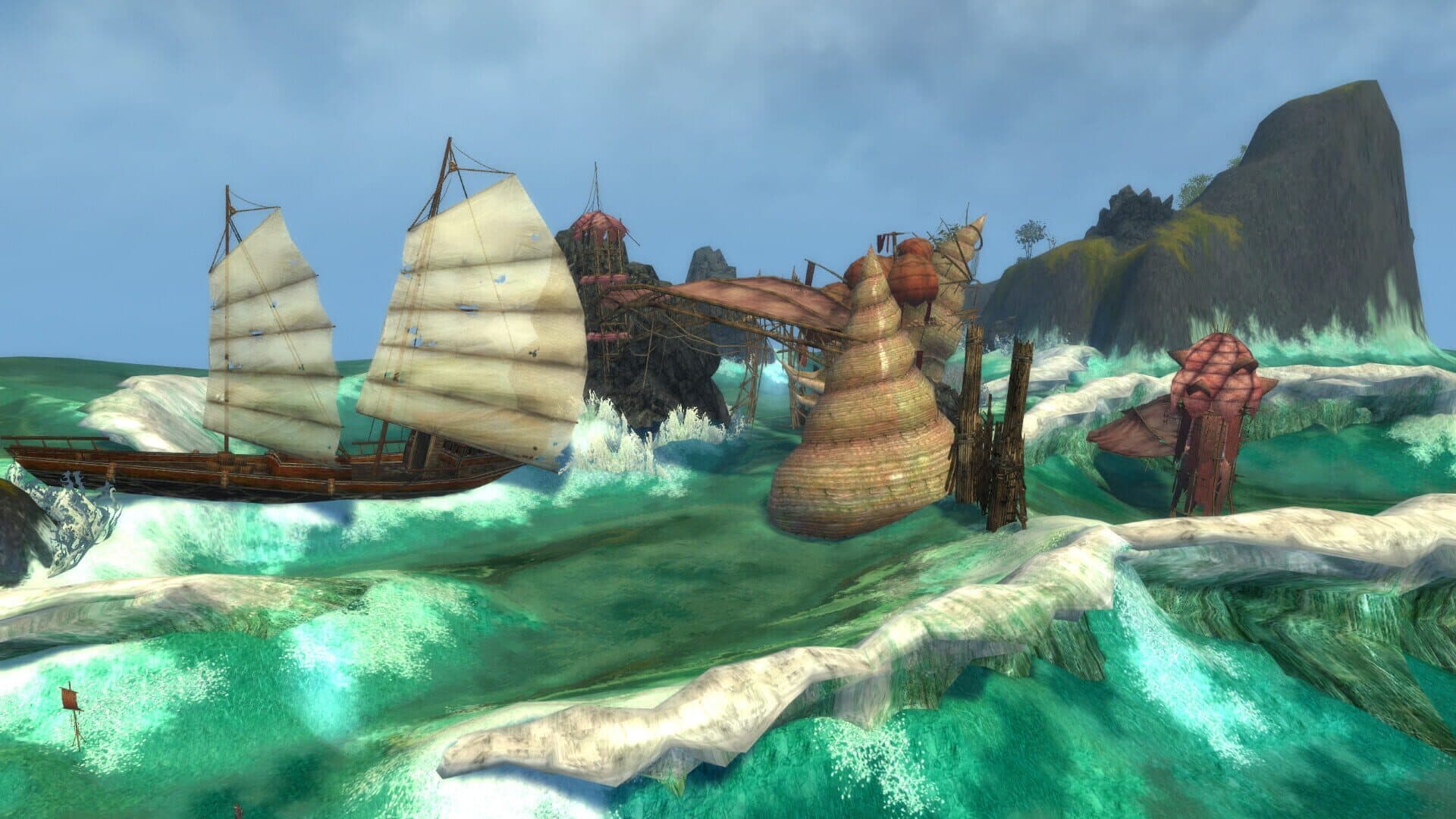
The overhaul is genuine but modest, and honest about it: controller and Steam Deck support, a redesigned UI with larger text and HD skill icons, improved lighting and positional audio, and at last a proper quest-tracking system. What it isn't: a remake or an engine rebuild. The models, animations and pacing are the original's — a careful facelift on a twenty-year-old game, not a new one.

Where it stands now
It's been Live since December 3, 2025 on PC, with 'Very Positive' reviews on Steam (~87% across more than 2,370 ratings). Launch landed: a peak near 5,600 concurrent players and a sales spike big enough that ArenaNet had to add servers. The momentum didn't hold, though: the population dropped sharply afterward, down to a few hundred concurrents by mid-2026. Support continues: it's updated regularly alongside studio 2weeks — veterans of the original game — who added new dungeons in April 2026, and it has an iOS and Android version with cross-progression planned for later in 2026.
Who it's for (and who it isn't)
It's a great fit if you want a co-op MMO with no subscription and no FOMO: hop in, play a campaign as one big team adventure, and step away — no daily time economies, no expiring passes. It shines for players who love theorycrafting builds and treating combat as a puzzle, for small groups of friends, and for anyone wanting to revisit a classic without wrestling dated controls. It's also a cheap doorway into a meaningful chunk of the genre's history.
The ceiling, plainly
Now, what not to expect. It's still a mid-2000s MMO: the presentation shows its age despite the facelift, and much of the design — travel, quest pacing, interface — belongs to another era. The population is low, so outside peak hours or playing with your own friends you'll lean on AI-controlled companions (heroes) to fill out a party, and competitive PvP no longer has the crowd it once did. And while there's new content, the bulk of the game is what it always was: anyone after a modern, living, massively populated MMO will find something else. As a playable, curated time capsule, though, it's hard to beat.
Screenshots
Artworks
Videos
Related news
No news for this game yet.