Stars Reach
About the game
Stars Reach is a sci-fi sandbox MMORPG from Playable Worlds, the studio run by Raph Koster (Ultima Online, Star Wars Galaxies) and Dave Georgeson (EverQuest). Its bet isn't combat or an endgame ladder — it's simulation. The entire galaxy runs as one logical universe, with no shards or parallel copies, so every planet and space zone exists exactly once and keeps whatever players did to it.
A galaxy that keeps its scars
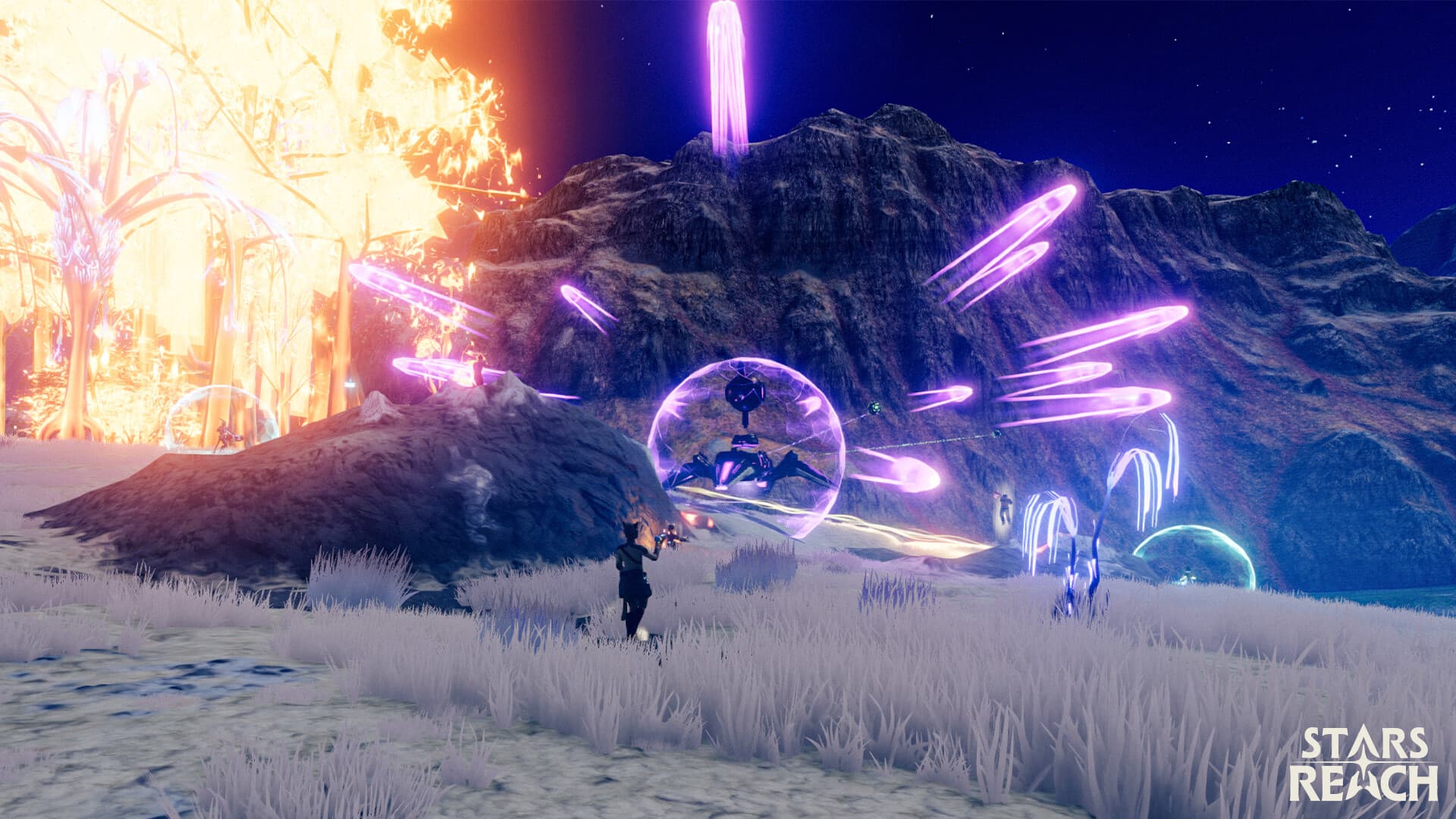
The simulation shows up in very concrete ways. Matter changes state: rock melts into lava, lava flows and hardens, water runs and erodes, fire spreads through a forest. Terrain can be dug, flattened and rerouted, and the consequences stick. You can push a river into a desert and watch it bloom; you can also pave over a region until its wildlife dies off. There's no reset button — what one group of players changes, everyone else lives with.
Forty professions and a player-run economy
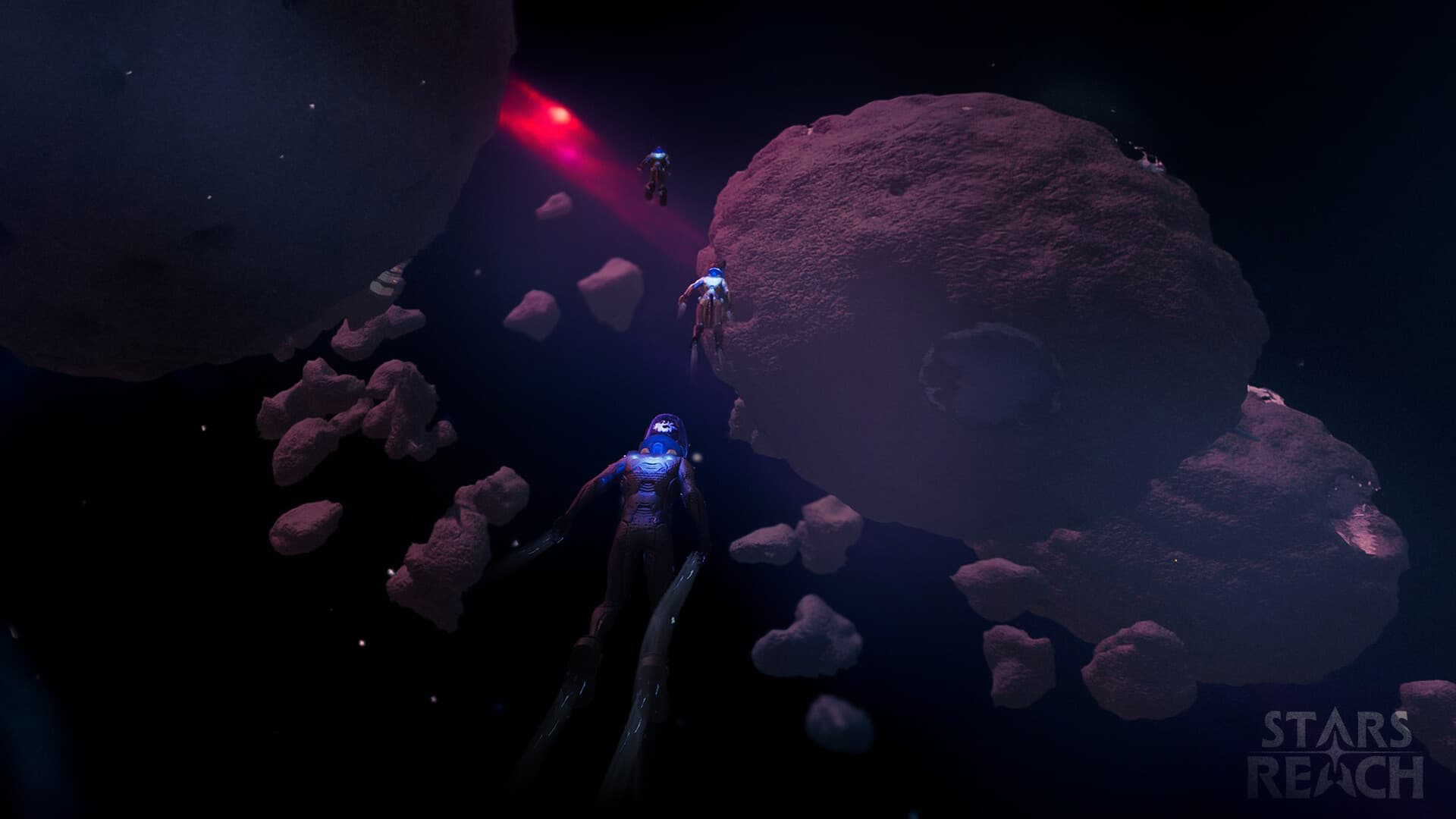
The design wears its Star Wars Galaxies influence openly: more than forty combinable skill paths and no locked classes. There's ranger, architect, trader, chef — even journalist, since documenting what happens in the world is a real profession with its own tools. Progression rewards interdependence in an unusual way: the buildings you raise and the items you craft grant experience when other players use them, so being useful to the community is itself a way to advance.
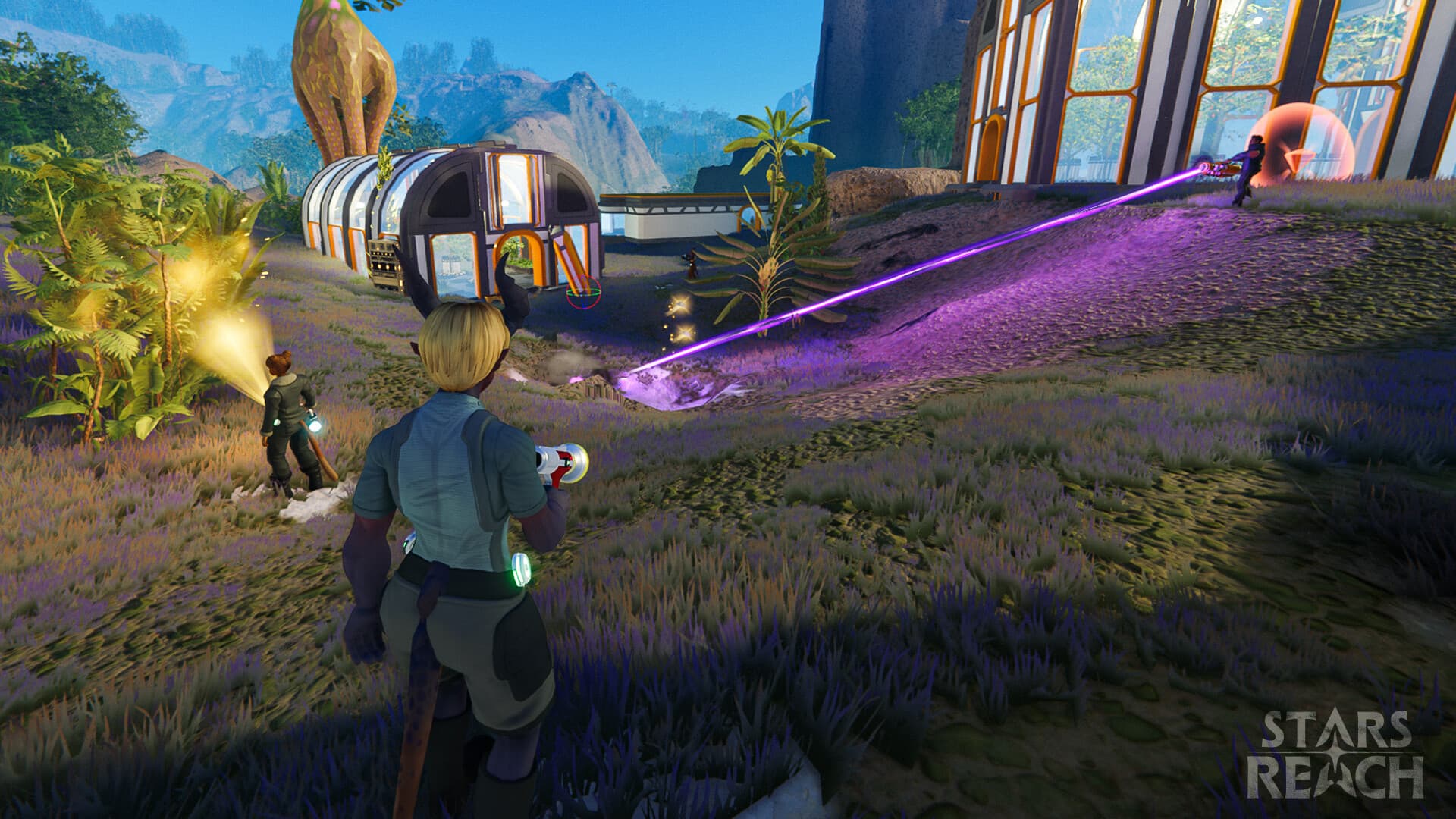
Building scales from a solo cottage to guild-governed cities, with a player-driven economy and anti-griefing systems baked in from the start. The weak spot is combat: the team frames it as arcade-flavoured — active dodging, bullet-hell-adjacent patterns — and it's the system testers question most, even in glowing previews like those from PC Gamer and MMORPG.com.
What you pay for, and what you don't
The business model is mid-transition, and it's worth understanding before reaching for a card. Right now the only way in is paying: access to the closed tests came from the Kickstarter campaign — over $750,000 from 5,300 backers against a $200,000 goal — and from the Founder's Packs that followed. For Steam Early Access the studio announced three paid editions: Firstlight ($29.99), Voyager ($49.99) and Cosmonaut ($79.99), each with its own rewards and cosmetics.
The stated plan for 1.0 is different: free-to-play with a cosmetic shop, an optional subscription, Supporter Packs every few months, and Property Passes — a planned monthly charge to hold on to land and housing. Playable Worlds insists there will be no pay-to-win and that monetisation leans on cosmetics and convenience; the fine print of each tier still isn't public, so the official FAQ is worth a read before committing. Translated: anyone buying in now is paying to follow a development, not to get a finished game.
Where development actually stands
It needs saying plainly: you can't buy it and play it yet. Stars Reach has been in closed pre-alpha testing since August 2024 and recently went through The Great Wipe, a full universe reset with new systems and visuals. By mid-2026 Koster was describing the project as "an update or so away" from alpha — the bar the studio set for itself before opening Early Access. What's left on that list is substantial: server stability, performance, more loot and gear, the return of wild wormholes, and closing the economic loop so crafting and looting genuinely improve your character.
The context isn't light either. The studio raised roughly $38 million from investors, but confirmed layoffs in early 2026 amid the industry's funding climate, and the launch window has slipped more than a year past what backers were told. Beta only arrives once the game is content-complete, and 1.0 may not land until 2028 or later. There's an uncomfortable detail on top of that: tests run with tiny populations — one tester reported a peak of just 38 concurrent players — so server scalability and shared-terrain wear remain unvalidated at real scale. For close tracking, MassivelyOP and the official blog are the best sources.
Who it's for (and who it isn't)
For anyone who misses the old-school social sandbox — pick a trade, raise a house, make yourself indispensable to your guild, leave a mark on a world that never resets — Stars Reach is probably the most ambitious attempt at that idea in years, and the press that has played it came away excited. It's built for players who'd rather build and trade than chase a progress bar, and for groups keen to split professions and keep a city running together.
It isn't the game for anyone after polished combat, guided content, or a stable hundreds-of-hours experience. And the honest reminder is worth repeating: much of what makes Stars Reach special is still a promise. Nobody knows what happens to a shared planet once thousands of players start carving it up at the same time, and that answer defines the whole project. It's absolutely worth watching closely — and worth walking into, when it opens, with measured expectations.
Screenshots
Videos
Related news
No news for this game yet.